







An NYC apartment renovation budget is shaped by more than square footage. Two apartments of similar size can require very different investments because the scope, building conditions, approvals, systems, and level of finish are different.
For projects beginning around $100,000, early clarity matters. The goal is to understand where the budget must support essential construction, where design choices create value, and which unknowns need investigation before work begins.
Start with a precise scope
A cosmetic update, selective kitchen and bathroom renovation, and full gut renovation are different projects. Define which rooms are changing, whether walls or plumbing will move, which systems need work, and whether the apartment will remain occupied.
A useful scope separates required work from optional improvements. It should also identify owner supplied items, custom work, and any parts of the apartment that must be protected. This gives the design and construction team a stable basis for drawings, pricing, and scheduling.
Existing conditions can change the investment
Prewar apartments may contain old wiring, uneven floors, aging plumbing, plaster repairs, and previous alterations. Newer buildings may have strict waterproofing, acoustic, mechanical, or finish requirements. Field measurements and targeted investigation help reveal the conditions that drawings alone cannot show.
Moving a kitchen or bathroom can affect plumbing routes, slab work, ventilation, waterproofing, and building approval. Opening walls can reveal work that needs correction. A realistic budget acknowledges these possibilities before demolition rather than treating every discovery as unexpected.
Kitchens and bathrooms carry concentrated costs
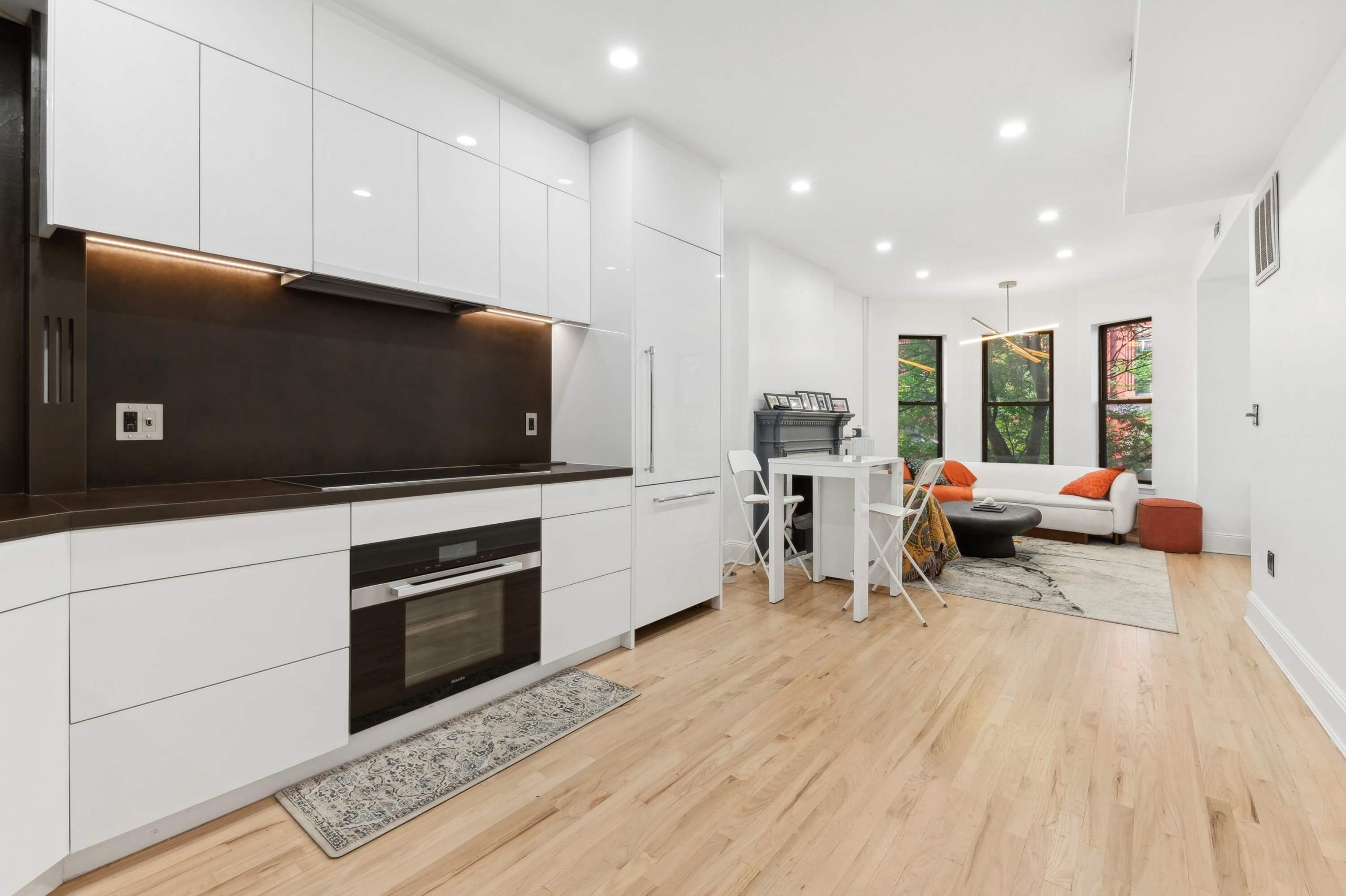
Kitchens combine cabinetry, appliances, stone, plumbing, electrical work, ventilation, lighting, flooring, and finish carpentry. Bathrooms concentrate waterproofing, tile, fixtures, glass, ventilation, and precise installation in a smaller area.
Cost is influenced by layout changes, custom cabinetry, appliance and fixture selections, stone complexity, tile pattern, and the amount of concealed infrastructure that must be updated. Keeping plumbing near existing locations can reduce complexity, but it should be evaluated against the long term value of a better layout.
Review Essential’s approach to apartment remodeling in NYC, kitchen remodeling, and bathroom remodeling.
Building requirements affect time and cost
Co-op and condominium projects commonly require drawings, insurance, contractor documentation, deposits, protection plans, work schedules, and review by building management or its architect. Some scopes also require city filings, permits, and inspections.
These steps affect professional fees, administrative time, schedule, and site logistics. Restricted work hours, limited elevator access, protection requirements, and material storage rules can influence labor productivity. The project budget should reflect the actual building rather than a generic renovation assumption.

Finish level should be defined with real selections
Broad labels such as standard or luxury are not enough for reliable pricing. A better approach identifies representative cabinetry, flooring, plumbing fixtures, appliances, lighting, hardware, stone, and tile. Quantities and installation details matter as much as unit prices.
Custom doors, integrated lighting, specialty finishes, and detailed millwork require design and fabrication time. Imported or made to order products may also affect the construction sequence. Early selections help the team distinguish a design priority from an avoidable late upgrade.
Protect the budget with contingency and decisions
A contingency is prudent for apartment renovation, especially when the project involves older construction or concealed work. Its size should reflect the amount of uncertainty remaining after surveys, drawings, and investigation.
Decision timing matters too. Late appliance changes can affect cabinetry and electrical work. Late tile decisions can delay waterproofing and installation. A complete schedule should include approval dates for owner decisions as well as construction activities.
What should a $100K+ consultation include?
Bring the property address, photographs, available floor plan, building alteration requirements, desired scope, priorities, preferred timing, and working budget. This information helps the team identify whether the project goals and budget are aligned and which professional review should happen next.
Build a clearer apartment renovation budget
Essential plans substantial New York renovations through one connected design and construction process.
Tell us about your apartment or explore our residential project portfolio.